
When I jazz information up to present it in this blog, I’m aware translating science can be risky. When I started introducing myself as a journalist at parties, some people backed away. There’s a perception that professional communicators aren’t trustworthy – and that polishing information for presentation makes it less real or less reliable.
I put some grit into the branding for this website because I am used to working with skeptical factory workers and scientists who distrust marketing’s varnish and gloss. I wanted to show people who value authentic and direct presentation of information that I do speak their language.
However, even though I speak their language, I still polish it. This puts me between multiple cultures. I see “facts-only” presentation as a statement of its own – either a statement that the presenter hasn’t had communication training or a statement that they are speaking to an audience which values facts.
There is no completely objective way to present information. One can seek facts supporting multiple viewpoints; that’s balanced journalism. But using the formats and buzzwords that convey scientific neutrality is a cultural statement; one could put data in Comic Sans font without changing the facts.
Marketers and nonprofit professionals have their own buzzwords too. The use of the word “outreach” instead of “marketing” is my favorite example of how social justice organizations avoid advertising language. This poses a challenge for me when I am thinking about advertising, branding and promotion for nonprofits.
Information technology (IT) buzzwords are especially difficult to translate. I’ve had several conversations with nonprofits in which I explained the value of crowdsourcing (as well as its occasional disadvantages). Other concepts, such as research database sharing, are less easy to describe. For nonprofits with few resources, sharing databases internally or externally makes sense, but this resource sharing doesn’t happen very often in organizations I know.
I organize a meetup, NetSquared Boston, with the goal of sharing information about media and technology innovation with Boston nonprofits. This meetup is one example of IT resource sharing. But it’s difficult to promote ideas like this when IT vocabulary is new to nonprofits.
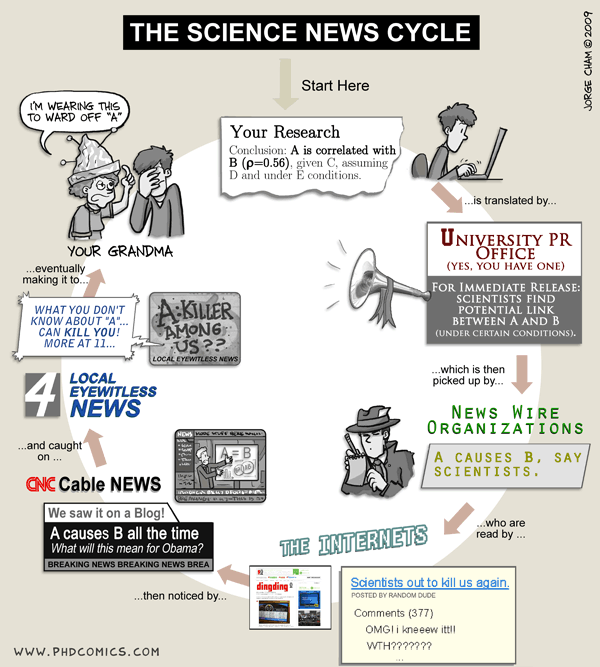
While buzzwords can establish credibility, I believe competent researchers should also be able to translate their work into simple explanations. In my conversations with scientists, I find that they do this with their families and friends often.
Science translation is an ongoing and enjoyable challenge. But it isn’t just a translation of science; it’s a translation of workplace culture and values. Translating culture is a much more complicated art than simplifying vocabulary.
I learn from each encounter with a new culture and value those experiences.


 Kat Friedrich