Can Simplifying Jargon Be Entertaining?

Sometimes the act of simplifying jargon can be very amusing. At the American Association for the Advancement of Science 2013 Annual Meeting this week, one of the presenters cited this xkcd comic strip with a down-to-earth illustration of a space shuttle. Its humor comes from its simple language.

Space shuttle comic strip

A space shuttle diagram which uses only the 1000 most popular words in the English language.

Try explaining the next piece of technology you own using language like this. It is challenging translating technical language into simple terms. But try it anyway – you might learn something interesting about science communication.

If you write about science, remember most people don’t know what a transistor is, let alone a superconductor. Here are two ultra-simple definitions:

  • A transistor is a product that can amplify electronic signals and switch them on and off.
  • A superconductor is a material that transmits electricity extremely well when it is very cold.

See how entertaining it can be to simplify technical writing?


This post won’t be complete until I invite you to follow me on Twitter and like my Facebook page.
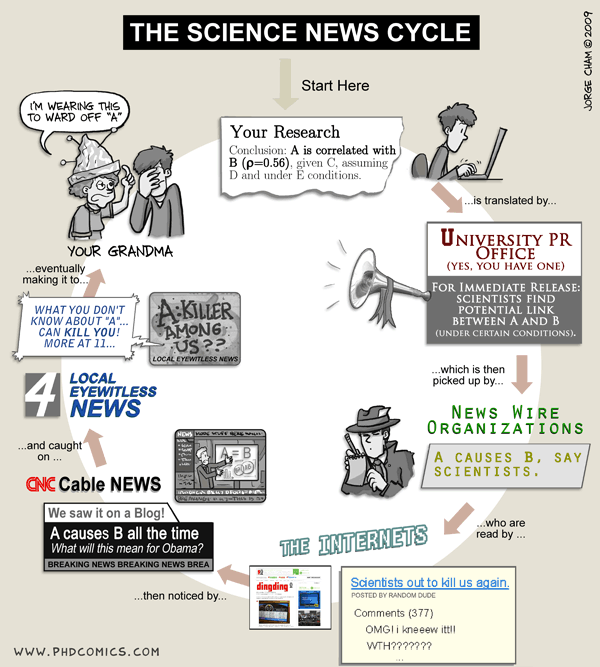
The Real Science News Cycle

I forwarded this comic about science news to a journalist the other day. But then I took a second look at it.

At first glance, the process seems simple. A scientist unearths valuable, complex information. The university PR department simplifies it… and the story goes downhill. At the end, the scientist’s grandmother is wearing a hat to protect herself from his discovery.

The Science News Cycle: Ph.D. Comics

The Science News Cycle. © Jorge Cham

After reading the comic, I realized I disagree with it. Often, in my experience, the process looks like this:

  1. The scientist’s grandmother already has an opinion.
  2. The scientist, publicist and reporters see their work as a one-way transfer of information. They don’t consider how audiences with preexisting opinions will respond to the story.
  3. The bloggers seek news that will confirm their preexisting views.
  4. The scientist’s grandmother shakes her head. Her belief has been reinforced. She goes online to buy a hat.
  5. At the end of the story, the scientist goes to ask a federal agency for funding. The agency leaders were appointed by politicians whom his grandmother elected. The scientist hopes the agency will make the right decision.
From the scientist’s point of view, the translation failed. From my perspective, the scientist and the publicist missed a chance to change the preexisting beliefs of their audiences. If there are misconceptions out there already, putting facts on the table may not be enough to change public perceptions of science.